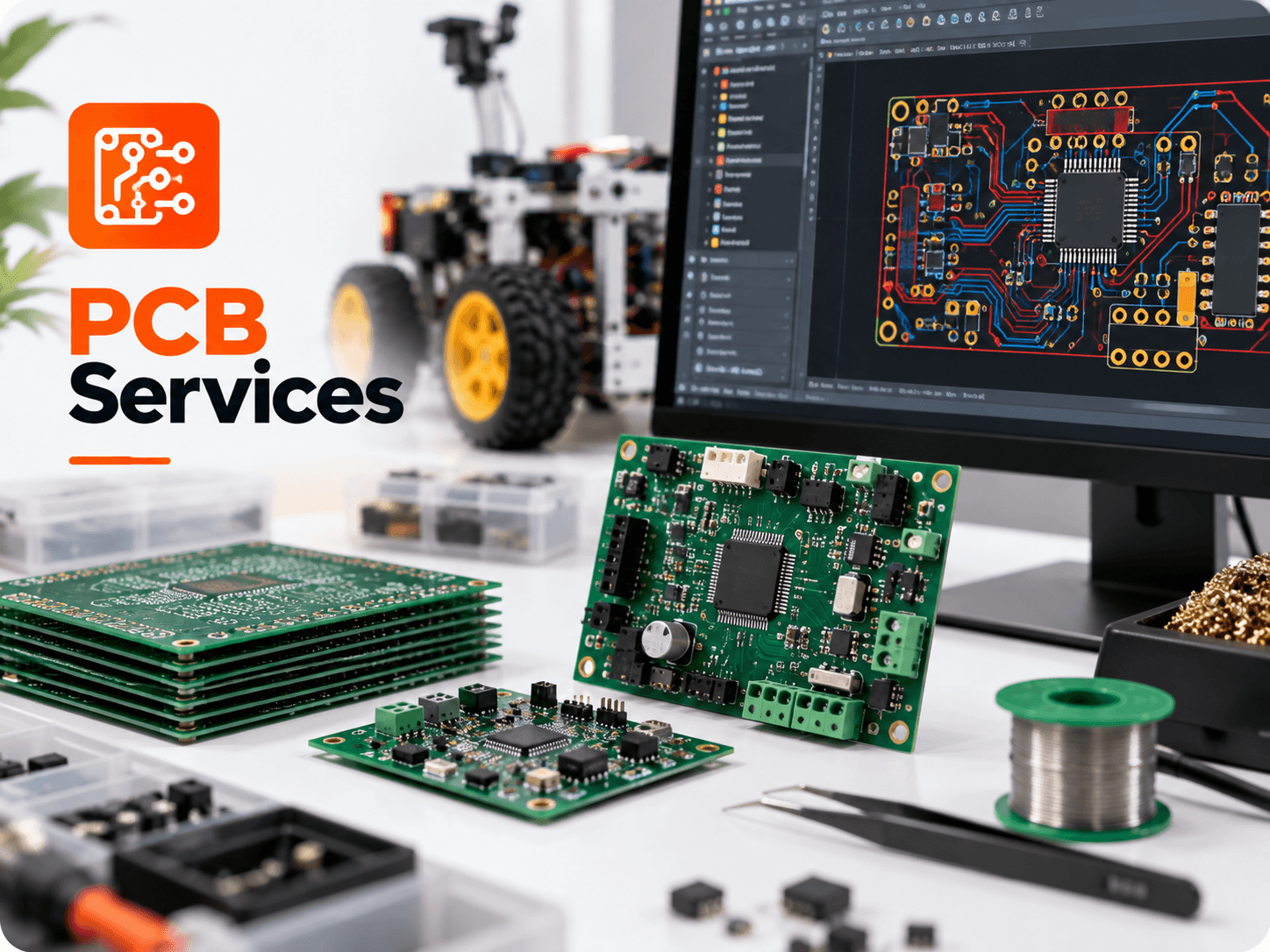
Moving an electronic product from concept to market involves two distinct manufacturing phases: prototype development and mass production. While both result in physical circuit boards, the engineering methods, tooling investments, component procurement logistics, and testing procedures differ significantly. Understanding these differences helps developers allocate engineering capital effectively and avoid premature production lock-in.
Core Objectives: Validation vs Scalability
The primary purpose of a PCB prototype is proof-of-concept validation, debugging, and iterative refinement. In prototype runs (typically 1 to 10 boards), the focus is speed and flexibility. Engineers need physical boards to verify power rails, flash firmware, evaluate sensor noise, and test mechanical enclosure fit. In contrast, production manufacturing (100 to 10,000+ units) prioritizes unit cost optimization, manufacturing yield, and long-term component availability.
Tooling Costs and NRE Fees
In prototype fabrication, boards are often routed individually or pooled on shared multi-project panels to minimize non-recurring engineering (NRE) setup costs. However, in full-scale production, dedicated photolithography tooling, laser-cut SMT stainless-steel stencils, and custom panelization fixtures are created specifically for the project. While this increases initial setup cost, it amortizes to pennies per board across hundreds of units.
| Parameter | Prototype Phase | Production Phase |
|---|---|---|
| Typical Quantities | 1 – 20 units | 100 – 10,000+ units |
| Delivery Priority | Speed & turnaround time | Unit price & manufacturing yield |
| Component Feed | Cut-tape & sample packs | Full reels & continuous SMT feeders |
| Panelization | Individual boards or simple tabs | V-scored automated production panels with fiducials |
| Inspection Method | Microscopic bench check & flying probe | Automated Optical Inspection (AOI) & bed-of-nails fixtures |
| Revision Changes | Frequent layout adjustments | Strict engineering change orders (ECO) |
Component Packaging: Cut-Tape vs Full Reels
During prototyping, components are commonly ordered in cut-tape strips from distributors. Automated pick-and-place machines require component feeder margins and leader tape to feed parts without jamming. In mass production, components must be purchased in full sealed reels (e.g., 3,000–5,000 pcs) or trays to ensure uninterrupted pick-and-place operation and avoid feeder reload downtime.
Order Rapid Prototype Circuit Boards →
Go Now